
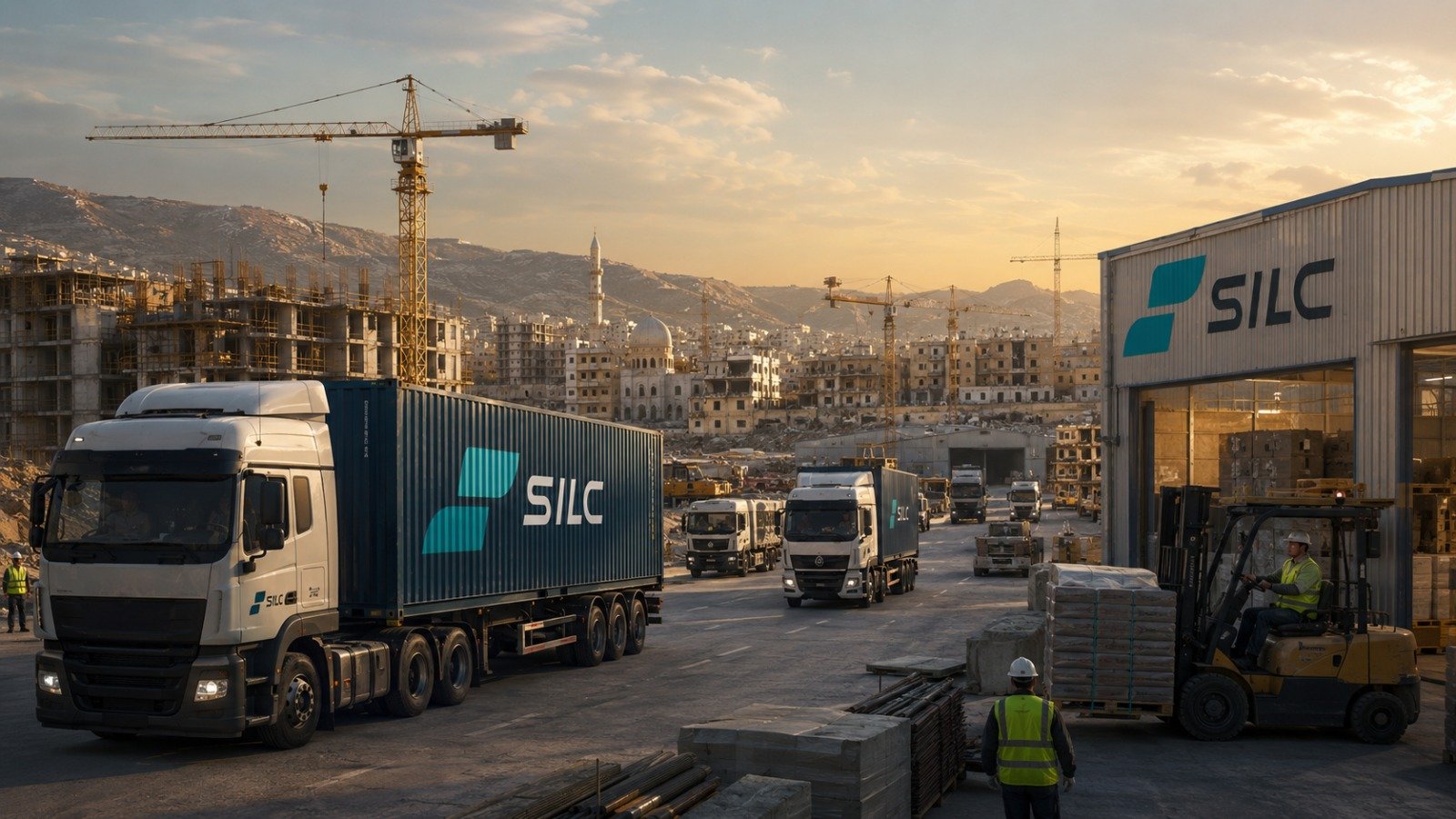
The Importance of Effective Supply Chain Management in Syria During the Reconstruction Phase
Reconstruction is not limited to rebuilding structures and repairing roads and facilities. More fundamentally, it depends on the ability to deliver construction materials, energy products, equipment, spare parts, medicines, and food to the right place, at the right time, and at the right cost. For this reason, the efficiency of supply chains will be one of the key factors determining the speed and quality of Syria’s economic recovery.
This becomes even more important given the scale of accumulated damage. The World Bank has estimated the cost of Syria’s reconstruction at approximately USD 216 billion, with infrastructure among the most heavily affected areas, including transport, energy, water, and telecommunications. Inefficient logistics management could therefore delay projects, increase costs, and waste the limited resources available for reconstruction.
- From Efficiency to Resilience
The latest approaches in supply chain management no longer focus solely on reducing costs. Increasingly, the emphasis is on building supply chains that are resilient, flexible, and capable of responding quickly to disruptions.
Recent research highlights risk management, flexible network design, digital analytics, digital twins, and artificial intelligence as important components of modern supply chains. These tools can help organizations monitor operations, identify bottlenecks early, anticipate disruptions, and evaluate alternative scenarios before crises occur.
In the Syrian context, this requires moving away from managing each shipment or project separately toward managing an integrated national logistics network that connects ports, border crossings, roads, railways, warehouses, transport companies, suppliers, and public authorities.
- What Does Syria Need?
During the reconstruction phase, Syria needs to identify its most critical supply chains, particularly those related to energy, cement and steel, machinery and spare parts, food, and medicines. Alternative suppliers, transport routes, and strategic inventories should also be planned in advance.
The country would also benefit from an integrated digital platform connecting shipments, warehouses, border crossings, and ports while providing real-time information on quantities, locations, estimated arrival times, and available storage capacity.
In parallel, customs procedures should be simplified, technical standards harmonized, procurement and contracting made more transparent, and clear performance indicators introduced to measure transport times, cost per ton, delays, vehicle utilization, and warehouse efficiency.
- A Historic Opportunity for Syria’s Geographic Position
Syria has an exceptional geographic location. It lies between Iraq and the Gulf states to the east, the Mediterranean and European markets to the west, Turkey to the north, and Jordan and the Arabian Peninsula to the south.
At a time of repeated geopolitical tensions affecting the Red Sea, the Suez Canal, the Strait of Hormuz, and other strategic trade routes, governments and businesses are increasingly seeking to diversify transport corridors and reduce dependence on a single route.
This creates an important opportunity for Syria.
Land corridors through Syria cannot completely replace maritime transport. However, they can provide complementary and potentially faster routes for selected cargo, energy products, high-value goods, and time-sensitive shipments. Syria could strengthen its role in connecting Iraq and the Gulf region with Syrian Mediterranean ports and, from there, with European markets.
To convert this geographic advantage into real economic value, Syria needs to rehabilitate roads, ports, railways, and border crossings; develop logistics centers and strategic warehouses; ensure security and operational reliability; establish transparent and efficient transit procedures; and strengthen transport agreements with neighboring countries.
In Conclusion, effective supply chain management is not simply a supporting service for reconstruction. It is a fundamental part of the reconstruction process itself.
Every investment in logistics planning, digitalization, infrastructure, workforce development, and public-private coordination can directly contribute to reducing costs, accelerating projects, attracting investment, and improving the availability of essential goods and services.
Syria today has an opportunity not only to rebuild what has been damaged, but also to restore and redefine its historic role as a regional link for transportation, trade, and logistics.
Taking advantage of this opportunity starts with building modern, resilient, and integrated supply chains capable of transforming Syria’s geographic position from an advantage on the map into a real economic strength on the ground.
This becomes even more important given the scale of accumulated damage. The World Bank has estimated the cost of Syria’s reconstruction at approximately USD 216 billion, with infrastructure among the most heavily affected areas, including transport, energy, water, and telecommunications. Inefficient logistics management could therefore delay projects, increase costs, and waste the limited resources available for reconstruction.
- From Efficiency to Resilience
The latest approaches in supply chain management no longer focus solely on reducing costs. Increasingly, the emphasis is on building supply chains that are resilient, flexible, and capable of responding quickly to disruptions.
Recent research highlights risk management, flexible network design, digital analytics, digital twins, and artificial intelligence as important components of modern supply chains. These tools can help organizations monitor operations, identify bottlenecks early, anticipate disruptions, and evaluate alternative scenarios before crises occur.
In the Syrian context, this requires moving away from managing each shipment or project separately toward managing an integrated national logistics network that connects ports, border crossings, roads, railways, warehouses, transport companies, suppliers, and public authorities.
- What Does Syria Need?
During the reconstruction phase, Syria needs to identify its most critical supply chains, particularly those related to energy, cement and steel, machinery and spare parts, food, and medicines. Alternative suppliers, transport routes, and strategic inventories should also be planned in advance.
The country would also benefit from an integrated digital platform connecting shipments, warehouses, border crossings, and ports while providing real-time information on quantities, locations, estimated arrival times, and available storage capacity.
In parallel, customs procedures should be simplified, technical standards harmonized, procurement and contracting made more transparent, and clear performance indicators introduced to measure transport times, cost per ton, delays, vehicle utilization, and warehouse efficiency.
- A Historic Opportunity for Syria’s Geographic Position
Syria has an exceptional geographic location. It lies between Iraq and the Gulf states to the east, the Mediterranean and European markets to the west, Turkey to the north, and Jordan and the Arabian Peninsula to the south.
At a time of repeated geopolitical tensions affecting the Red Sea, the Suez Canal, the Strait of Hormuz, and other strategic trade routes, governments and businesses are increasingly seeking to diversify transport corridors and reduce dependence on a single route.
This creates an important opportunity for Syria.
Land corridors through Syria cannot completely replace maritime transport. However, they can provide complementary and potentially faster routes for selected cargo, energy products, high-value goods, and time-sensitive shipments. Syria could strengthen its role in connecting Iraq and the Gulf region with Syrian Mediterranean ports and, from there, with European markets.
To convert this geographic advantage into real economic value, Syria needs to rehabilitate roads, ports, railways, and border crossings; develop logistics centers and strategic warehouses; ensure security and operational reliability; establish transparent and efficient transit procedures; and strengthen transport agreements with neighboring countries.
In Conclusion, effective supply chain management is not simply a supporting service for reconstruction. It is a fundamental part of the reconstruction process itself.
Every investment in logistics planning, digitalization, infrastructure, workforce development, and public-private coordination can directly contribute to reducing costs, accelerating projects, attracting investment, and improving the availability of essential goods and services.
Syria today has an opportunity not only to rebuild what has been damaged, but also to restore and redefine its historic role as a regional link for transportation, trade, and logistics.
Taking advantage of this opportunity starts with building modern, resilient, and integrated supply chains capable of transforming Syria’s geographic position from an advantage on the map into a real economic strength on the ground.